

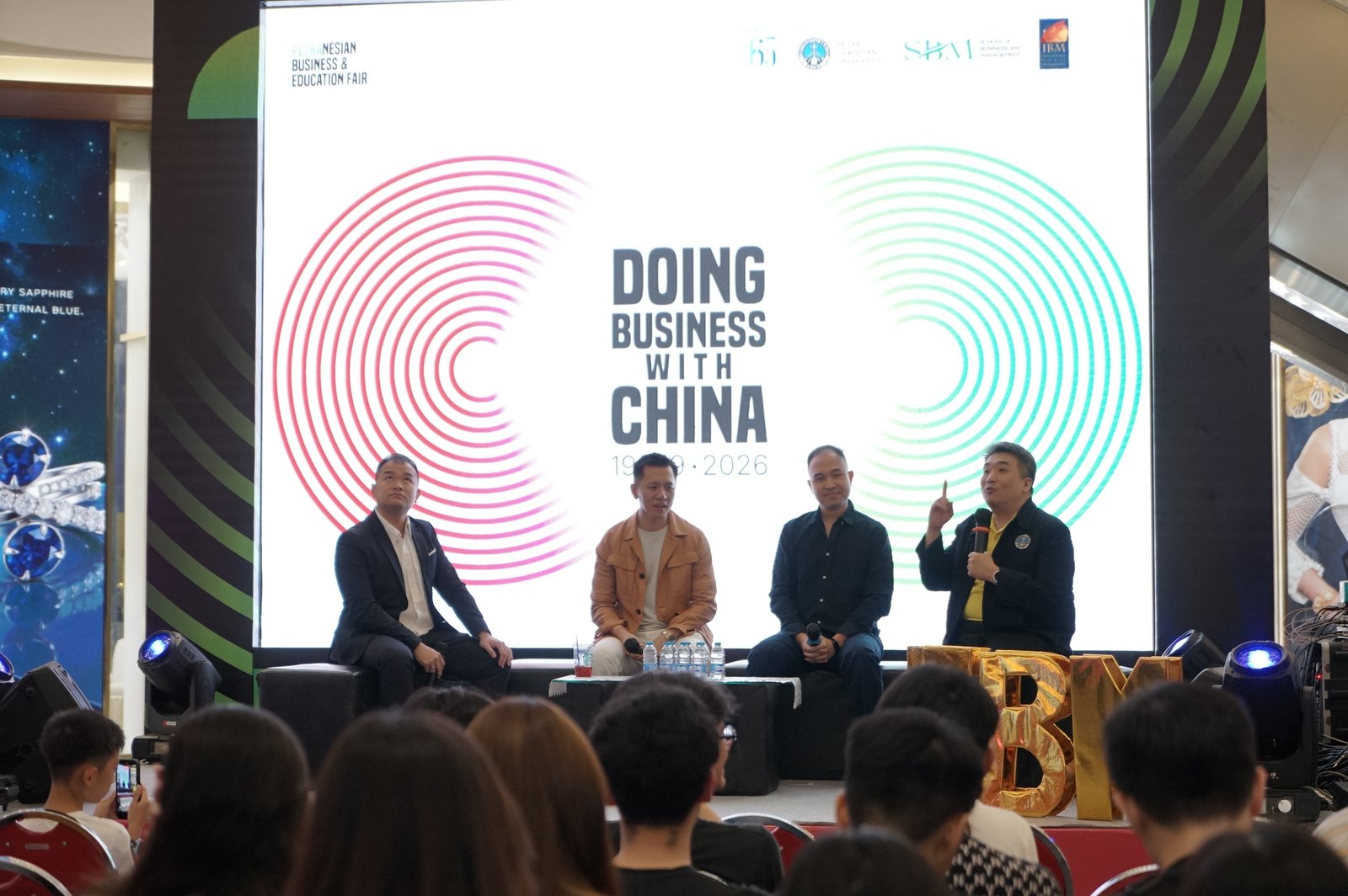
Three alumni of the International Business Management program at Petra Christian University explain how they came to do business with China, and what the country asks of an Indonesian company.
Three alumni of the International Business Management program at Petra Christian University spoke in Surabaya on 19 September 2026 about doing business with China. None of the three planned to. One was pushed by his family’s clients, one followed the low cost of manufacturing, and one went looking for the right factory.
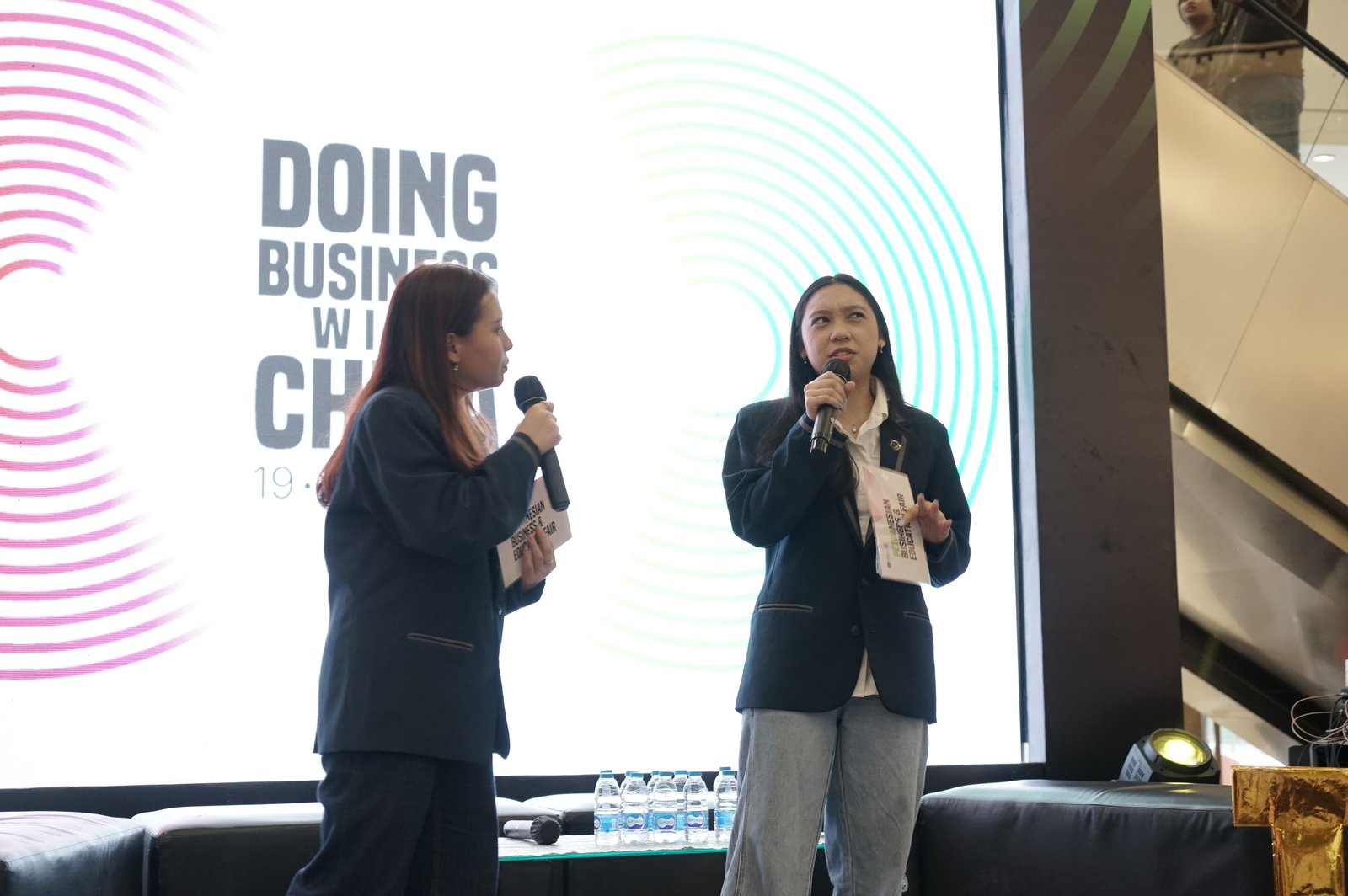
The one-hour talk, “Doing Business With China”, was part of the Petranesian Business & Education Fair. The stage stood in the open atrium of Galaxy Mall 3, so anyone in the mall crowd could stop and listen. Dr. Lianto Darmawan, who teaches multinational finance and business strategy in the IBM program, moderated.
How does an Indonesian business come to work with China?
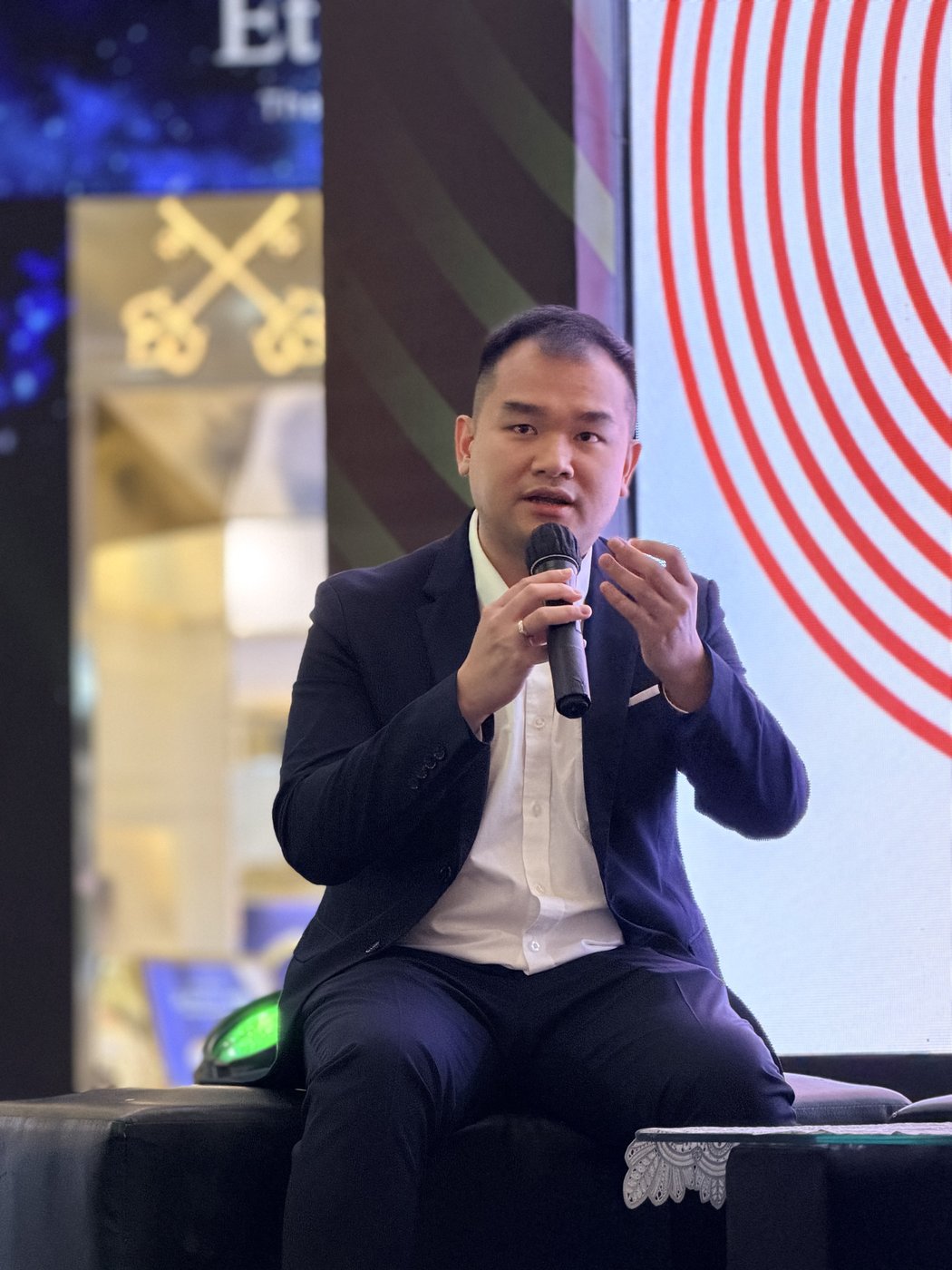
Anthony Kusumoputro, batch 2008, took over a move his family made in 2003. After two years of daily labour demonstrations in Indonesia, he said, the family’s clients gave them a clear message: move production to Vietnam or China. Vietnam’s infrastructure was not ready, so the family opened a factory in China. Anthony’s factory makes winter clothing and skiwear and is still running. He now owns it, alongside a property business, a kerupuk factory and a share in an airline business in Indonesia.
Stephanus Lukmanto, batch 2003, chose China on purpose, in 2015. By then China had become the world’s factory. Costs were low, shipping reached every market, and suppliers and prices were easy to find online. He said a business could start there with very little money, and that is how he started. Today Stephanus is a serial entrepreneur based in Malang who has both bought from and sold to China.
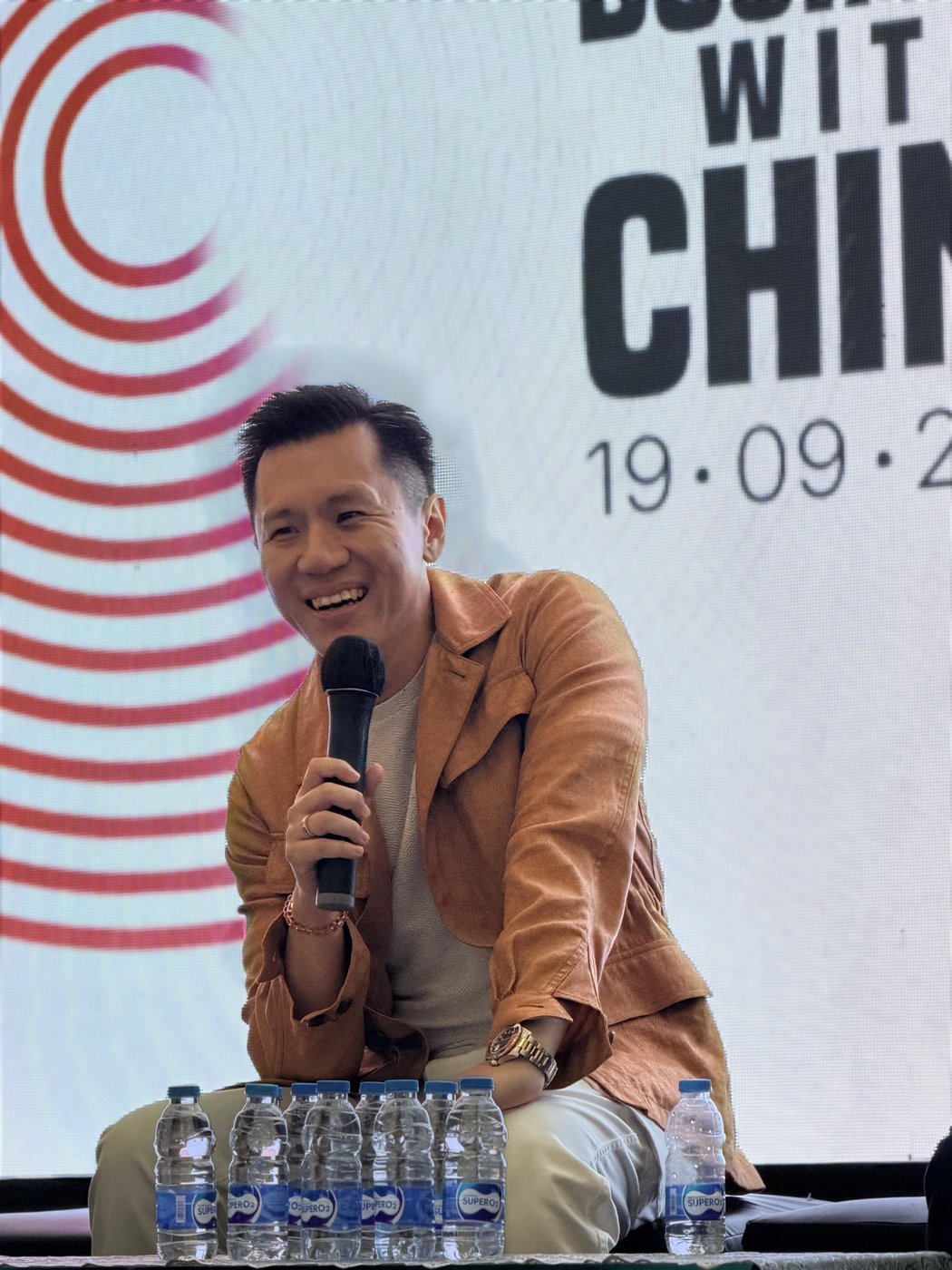
You could start with very little capital.
Billy Handoyo, batch 2012, went to China to find a factory. His brand, Miniletics, began by distributing for a local badminton brand. Then he saw a gap in the market: activewear for women. He tried factories in Indonesia and abroad until he found one that could make clothing that looks good and lasts through real training. Before Miniletics, he said, he had started seven or eight businesses. All of them closed.
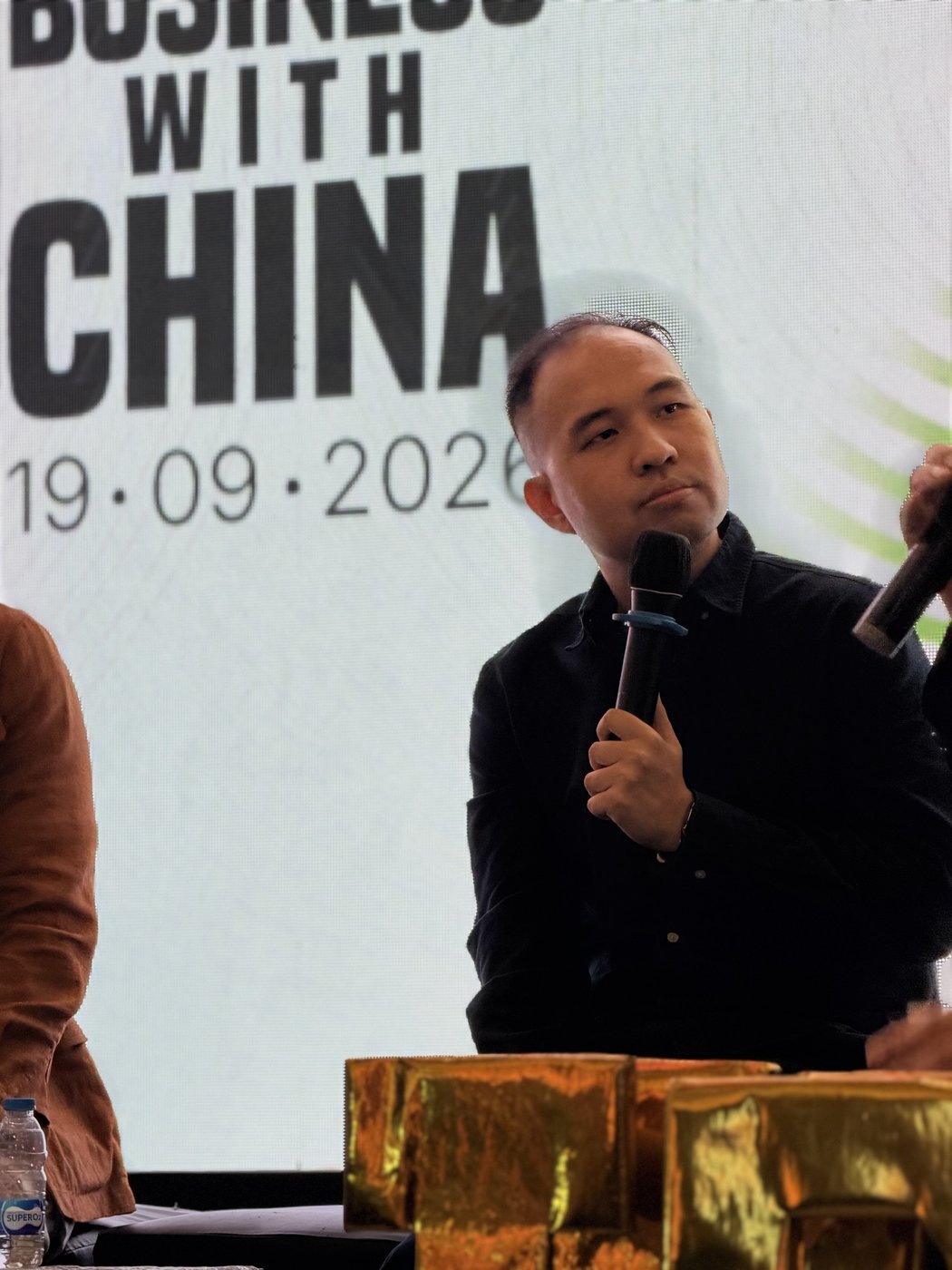
Either you succeed, or it’s a learning.
How each alumnus came to work with China:
- Anthony Kusumoputro (batch 2008): his family’s clients asked the company to leave Indonesia, and the factory in China opened in 2003.
- Stephanus Lukmanto (batch 2003): he followed low production costs and started trading in 2015 with little capital.
- Billy Handoyo (batch 2012): he searched for a factory for his activewear brand, Miniletics.
What makes China different to do business in?
Anthony, who has run a factory in China since 2003, described three differences.
The first is the attitude to work. The New Year greeting Gong Xi Fa Cai means roughly “may you become richer”. In Anthony’s experience, Chinese workers take that seriously and see work as the way out of poverty. He said this attitude took centuries to build, and no bonus scheme can copy it.
Work is a vacation from poverty.
The second is geography. Chinese industry is grouped by city, so the real question is which city makes the product you need. For marble, that city is Shuitou in Fujian province, where the quarries, cutters, exporters and shipping companies all work side by side. Knowing which city makes what, he said, is most of the job.
The third is a rule. Chinese public officials are not allowed to run companies, he said, which keeps the people who make policy apart from the people who profit from it.
What did the International Business Management program give them?
The panel was asked what their years in the IBM program had given them. All three put values first: integrity, then professionalism. International business brings new problems, culture shock and regular temptations to bend the rules, they said. A person who sets firm standards early soon stops seeing the dishonest option as a choice at all.
One speaker traced his idea of business back to a class with Dr. Ricky, the IBM program’s founding head. The Mandarin phrase for doing business, 做生意 (zuò shēngyì), carries the sense of giving birth to meaning. On that view, the aim of business is to create meaning for a company and a family, not only to make money.
The breadth of the curriculum mattered more than any single subject. The three alumni studied export and import, business law, accounting, quantitative analysis and family business sustainability, but never at specialist level. That breadth, they said, gives them a wide view whenever they face an unfamiliar problem. The same breadth shapes the IBM program’s career outcomes for graduates and its selective tracks.
The three also valued the parts nobody plans: group work that ran until midnight, lecturers they could argue with, and English. Each built a global outlook at a time when the internet was slow and smartphones did not exist.
What advice did the alumni give current students?
The alumni started from one fact: the world now changes faster than any curriculum. Artificial intelligence changes every week, false information is everywhere, and what a student has just learned can quickly feel out of date.
Adapt, they said, but build a strong foundation first, so that not every new wave moves you. Hold on to your values. Stay humble, because humility keeps you learning and helps you understand yourself. Make friends in every circle, because everyone has something to teach. Then do your best, and leave the rest to God.
Dr. Tessa Vanina Soetanto, head of the International Business Management program, closed the session by presenting each speaker with a token of appreciation.
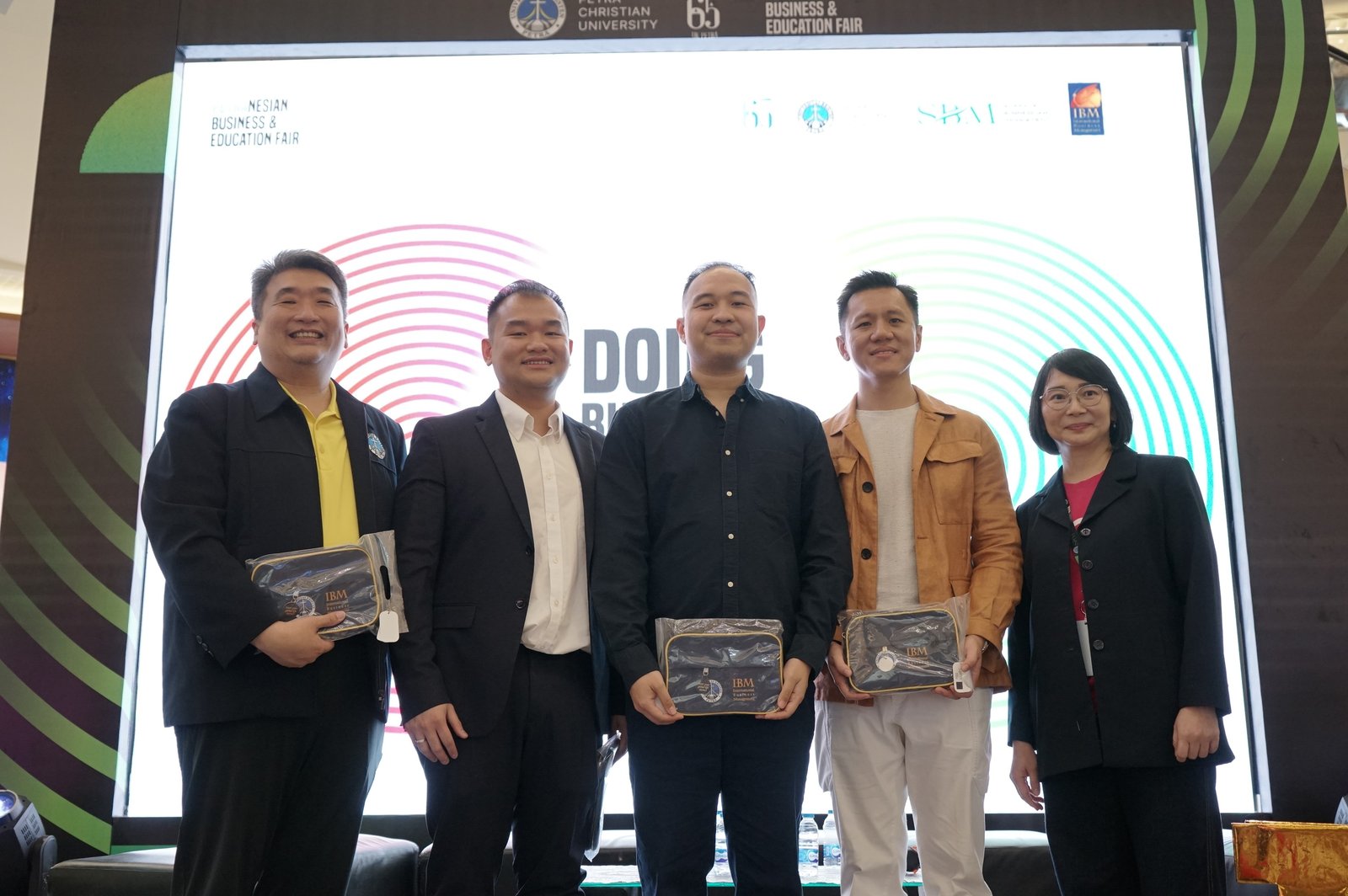
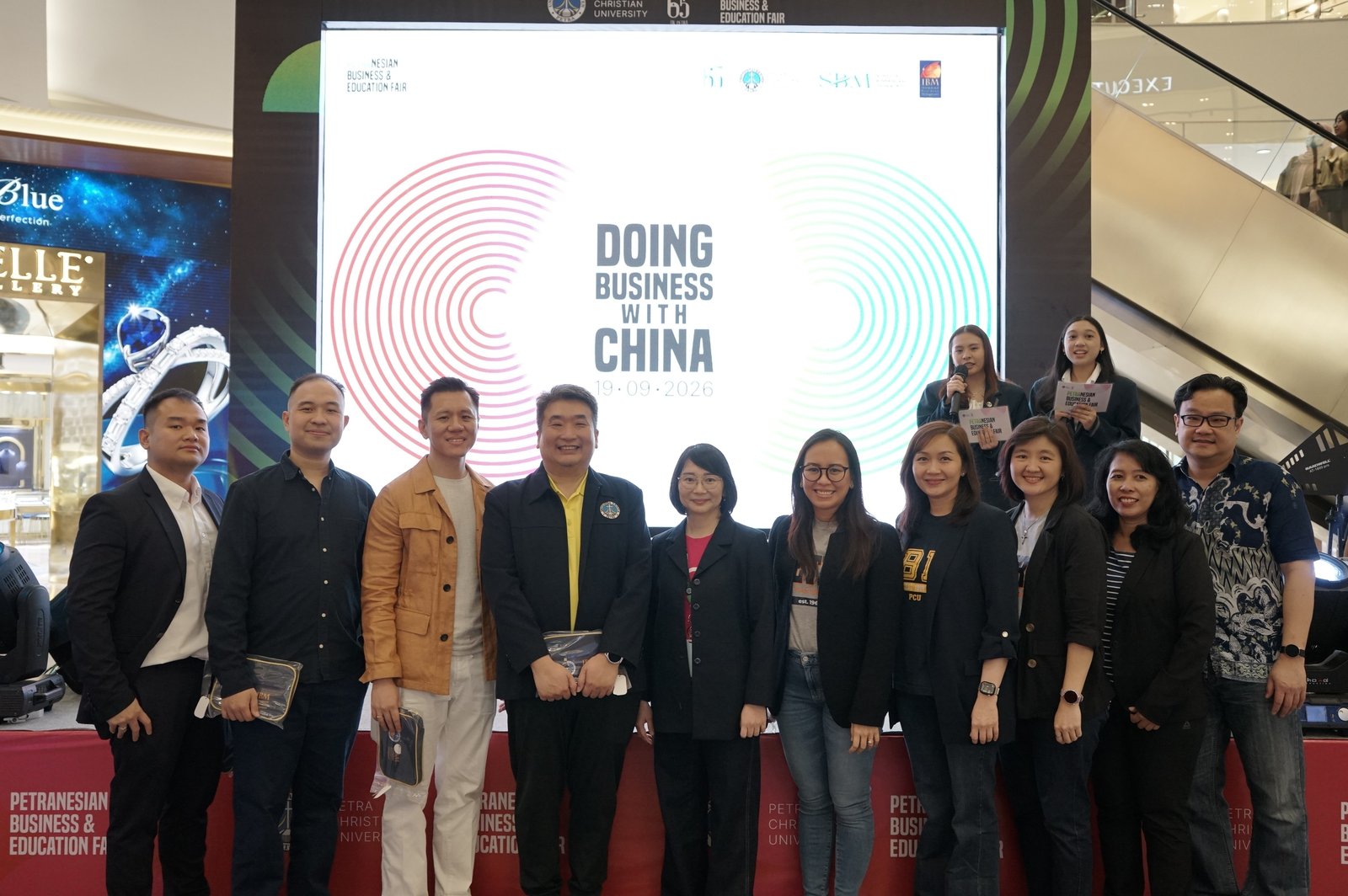
None of the three alumni of the International Business Management program at Petra Christian University set out to trade with China. A client’s warning, low costs and the search for a factory took them there. All three credited the degree with a broad grounding and firm values, which they still rely on when a new problem arrives.
About International Business Management UK Petra
International Business Management at Petra Christian University is an English-taught undergraduate degree in Surabaya, Indonesia, running since August 1999. The program is 144 credits across seven semesters, taught entirely in English, and admits international students every semester.
Every student spends at least one semester on the Leadership Enhancement Project, either on exchange abroad or in industry. Students can earn double degrees with Saxion University of Applied Sciences in the Netherlands, Hochschule Koblenz in Germany, the University of Lincoln in the United Kingdom, or Soongsil University in South Korea.
Graduates of International Business Management work at Nike, Google, LinkedIn, McKinsey, Unilever and Deloitte across Asia, Europe, North America and Australia. Alumni include Sherly Tjoanda, Governor of North Maluku.